
Seeds the source of ALL food, Recognition of land workers knowledge…. A Universitè – the key to the future.
ARC2020 Agricultural and Rural Actors Working Together for Good Food, Good Farming and Better Rural Policies in the EU.
A group of likeminded people from across Europe who at the end of November returned to Plessè in rural Brittany, France, to progress the ambition to establish a university which will embody the skills often held by peasant land workers and indeed indigenous peoples.
Feeling like an outlier from Scotland, which is no longer in the EU, was I an imposter… well in some ways yes, but Scotland still has a story to tell. Our replacement for CAP (Common Agricultural Policy) is the Agriculture and Rural Communities (Scotland) Act, which importantly includes rural communities. The Good Food Nation (Scotland) Act and Community Land Scotland, which are all embedded in legislation in Scotland with the potential to support rural and island communities which after all live and work in areas which produce food.
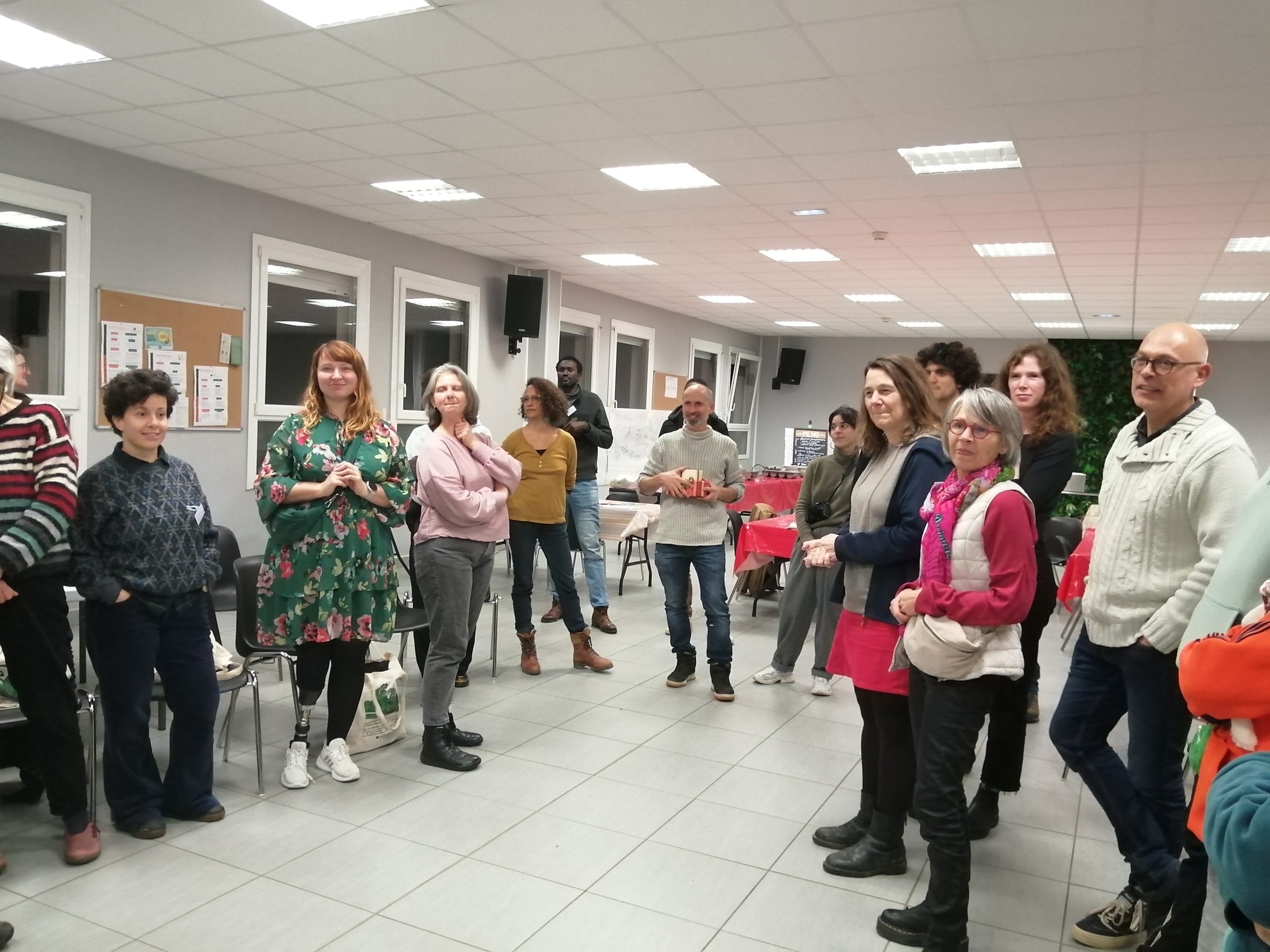
ARC2020 – Rural Resilience Gathering in Plessé, France. Photo by Theona Morrison
The gathering included: heritage seed specialists – an educationalist from Luxembourg and a baker from Belgium among others, organic farmers from Germany, Policy officers from within the EU, local elected politicians, agricultural commentators and so many more, from France, Italy, a traditional skills school in Poland, a food cooperative in Poland, Hungary, Ireland and me from Scotland.
My own contribution was that I had worked on the introduction of the Crofting course into the school curriculum, Local Food Production and Community Land Ownership curriculum materials. It was also pertinent to shine a light on the story of Sabhal Mòr Ostaig, the Gaelic college located in the south end of the Isle of Skye. 50 years ago, Sleat in Skye, was losing population and becoming a fading community. A group of people including merchant banker Sir Iain Noble outlined the ambition to establish a Gaelic medium college that would deliver a range of courses through the medium of Gaelic, thereby making the economic case as well as supporting the cultural importance of the language. At first the courses were awarded by another university until SMO became an accrediting and awarding centre. Today, we know it is the recognised college for Higher Education through the Gaelic language as part of the University of the Highlands and Islands.
How and whether such life sustaining skills in terms of food production are accredited was debated at the gathering. Some of the attendees committed to create learning materials for the university. They have secured a chateau and surrounding land, along with backing from local officials and community members who are dedicated to bringing the project to fruition.
We were fed by a team of gastronomic experts, a delicious mouse tasting like coffee…made from lupin seeds, who’d know! Local flour bread, local vegetables and fruit brought to life in extraordinary ways and all organic from the locale. Being in Brittany, the gathering ended with what we would call a ceilidh, coming from Scotland the pipes, accordion, fiddle, dance and song seemed more than familiar, after all, Scotland may be outside of the EU but there is still a cultural legacy stemming from the Auld Alliance between Scotland and France, some things continue!
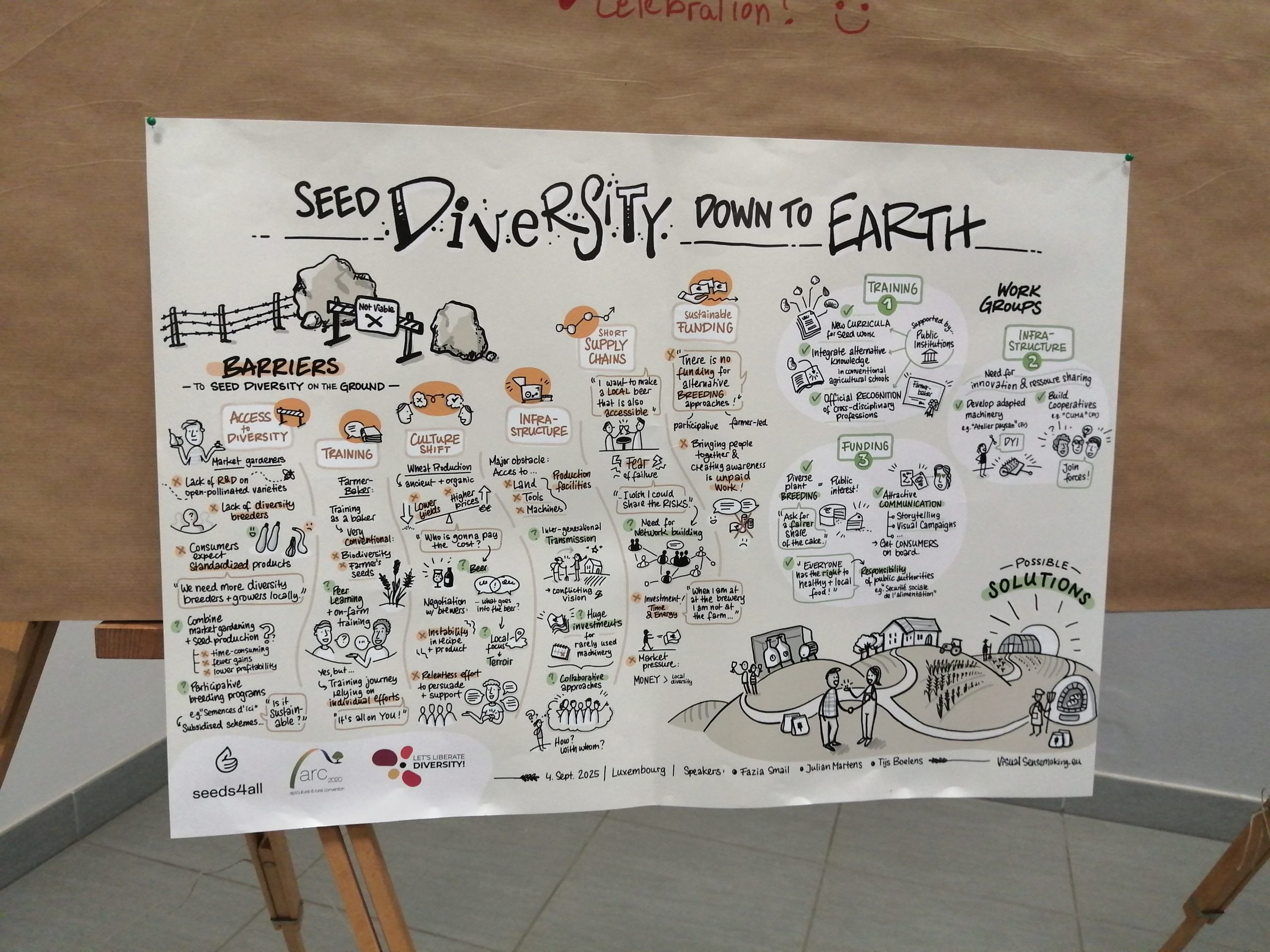
ARC2020 – Rural Resilience Gathering in Plessé, France. Photo by Theona Morrison
Anyone who is concerned about seed sovereignty in relation to sustainable food production will know that this can be an issue facing tension. The farmers who save seeds with local provenance often find themselves out of favour with the corporate seed and concomitant fertilisers and pesticide producers – global corporations. The Declaration on the Rights of Peasants (UNDROP United Nations Declaration on the Rights of Peasants and Other People Working in Rural Areas) does offer some degree of recognition, however the in the global market it seems incredible for smallholder farmers where ultimately they could face fines or imprisonment if they save, swap or sell some seeds on their own land all because of an international agreement called The International Union for the Protection of New Varieties of Plants 1991 – or UPOV91.
The Peasant University in rural France will be entering this arena.
Interestingly the city of San Francisco has just sued ten leading food makers over their ultra-processed (food) products, accusing the industry’s giants of knowingly selling foods that have been linked to a rise in serious diseases. In Scotland we know that the health is responsible for 40 -50% of the national budget. Would it be too big a leap to consider this is linked to what we eat?
With the knowledge that an impossible aspiration to create a Gaelic college in the south end of the Isle of Skye which has become a leading Higher Education facilitate, then I see with all the skills and commitment to establish the Universitè of Paysanne can indeed become a reality.
Its manifesto to date is:
The Manifesto
A peasant university, what for?
The peasant class is on the verge of extinction.
To jolt the youth
What role should the Peasant University play?
What might the University of Peasantry and Crafts look like?
Who is the UPA aimed at?
What about the existing situation?
How to finance
How to mobilize without imposing
I hope I see it realised to the benefit of all of us!
– Theona L Morrison Scottish Rural Action, chair.
Theona L Morrison, Scottish Rural Action, Chair